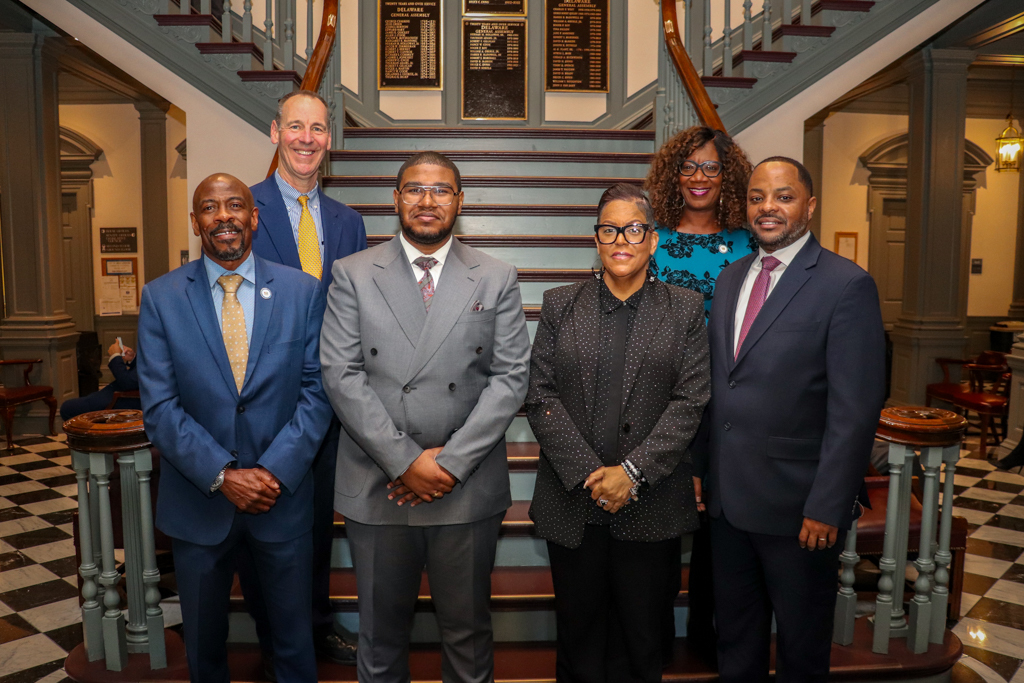
DOVER – In a step toward promoting safety, inclusivity, and understanding within law enforcement interactions, Rep. Nnamdi Chukwuocha, alongside Sen. Darius Brown, filed legislation Tuesday designed to ensure more equitable treatment for individuals with nonapparent disabilities during encounters with law enforcement.
Advocated for by Eric Carpenter-Grantham and his mother, Linda Carpenter-Grantham, HB 280, also known as “Eric’s ID Law,” would establish a voluntary option allowing Delawareans to display a discreet butterfly symbol on state-issued driver’s licenses and identification cards. The designation would give individuals with nonapparent disabilities a way to communicate their needs and circumstances during interactions where verbal communication may be difficult.
HB 280 would require the Division of Motor Vehicles (DMV) to make available a notation on state-issued ID cards indicating a person has a disability, including intellectual or developmental disabilities. The legislation would also strengthen police training requirements by ensuring officers receive instruction on recognizing the symbol and on best practices for safe and effective interactions during traffic stops and other encounters involving individuals with nonapparent disabilities.
“Across Delaware, many people live with nonapparent disabilities such as autism and certain mental health conditions— disabilities we cannot always see or understand,” said Rep. Chukwuocha.
“That lack of understanding can become dangerous, especially during encounters with law enforcement. Eric’s ID Law is about prevention, ensuring confusion does not turn into fear or harm. With the right tools and information, officers can act more safely and effectively because understanding protects everyone.”
On October 1, 2025, Maryland became the first state to enact this legislation. Since then, thousands of Marylanders have taken advantage of this option.
“Being a person with autism, I want the disability community to know this bill was created for you, and me, to feel safe and have a voice,” said Eric Carpenter-Grantham.
“As a mother, this bill is more than a piece of legislation, it’s a plea for safety. Both the lives of people with disabilities and interactions with law enforcement can already be unpredictable, as it is. Bringing this bill from Maryland to Delaware has been a journey, but to see the reception this initiative has had in Maryland already showcases a true need that extends nationally,” said Eric’s mother, Linda Carpenter-Grantham.
“This bill is a powerful tool that will empower every single individual with an invisible disability the ability to advocate for themselves — something us able-bodied people often take for granted. My son is not a monolith, but I refuse to let him become an example.”
“Countless Delawareans live with disabilities that aren’t immediately visible, and that lack of visibility can lead to dangerous misunderstandings, particularly during interactions with law enforcement. Eric’s ID Law is rooted in compassion and safety for our neighbors living with disabilities,” said Sen. Darius Brown. “By giving individuals a simple, free way to communicate a hidden disability, we are fostering understanding and collaboration between communities and first responders. This law will make our roads and communities safer and more accessible for everyone.”
Upon passage, the DMV would be directed to consult with disability advocacy organizations regarding the design of the notation and to conduct public outreach to ensure Delawareans are aware of the voluntary option.
Eric’s ID Law has been assigned to the House Public Safety & Homeland Security Committee.
You can view a recording of the press conference here.
###
